Peptides for Skin: Benefits, Types, and How to Use Them
Peptides are short chains of amino acids used in topical skincare to support the appearance of smoother, firmer, and more resilient-looking skin. Different peptides are formulated for different goals, such as the look of fine lines, rough texture, dryness, or loss of elasticity. A peptide serum can be a useful part of a consistent skin care routine, but the right formula and routine depend on your skin, concerns, and other products.
Peptides have become one of the most talked-about ingredients in modern skin care. You may see them in serums, moisturizers, eye products, and treatments designed for aging skin. That attention can make peptides sound mysterious or universally transformative. The reality is more practical: peptides are a broad ingredient category, and their role depends on the specific peptide, the formula around it, and how consistently the product is used.
For someone noticing fine lines, dullness, rough texture, or a gradual loss of firmness, peptides skincare can be a sensible category to explore. They are not a replacement for sun protection, a gentle routine, or medical care when it is needed. Instead, they can be one targeted step in a routine designed to support healthy-looking skin over time.
1. What Are Peptides in Skin Care?
Peptides are short chains of amino acids. Amino acids are the building blocks that make up proteins, including proteins that are important to the skin’s structure, such as collagen, elastin, and keratin. In skincare, peptides are selected and formulated because they can help support specific cosmetic goals, from the appearance of smoother texture to improved-looking firmness.
Peptides, proteins, and polypeptides
The terms peptides, proteins, and polypeptides are related, but they are not interchangeable. A protein is a larger, more complex chain of amino acids. A peptide is shorter. A polypeptide is generally longer than a peptide but shorter or less structurally complex than a full protein. When people ask, “What are polypeptides in skin care?” they are usually asking how these amino-acid-based ingredients fit into a topical formula. The practical answer is that the ingredient name alone does not tell you the expected outcome; the peptide type, concentration, delivery system, and rest of the formula all matter.
Topical peptides versus other peptide conversations
This article is about topical peptides for skin: ingredients applied to the skin in a serum, moisturizer, or treatment. That is different from oral supplements and very different from injectable peptide products. A topical skin care product should be evaluated on its own formulation, directions, and evidence. Keeping that distinction clear helps prevent a common problem in online skincare discussions, where very different products are grouped together simply because they share the word “peptide.”
In a topical formula, peptides are usually paired with other skin-supportive ingredients. A serum may also include humectants to help skin feel hydrated, soothing ingredients to support comfort, or ingredients designed to improve the formula’s texture and usability. This is one reason two products that both say “peptide serum” can feel, perform, and fit into a routine very differently.
Who might consider adding a peptide product?
A peptide product can be worth considering if your current routine already has the basics in place and you want a more targeted step for visible skin changes. That may include people who are focused on fine lines, early signs of loss of elasticity, uneven-looking texture, dullness, or a routine that needs more barrier-supportive care. It can also be a reasonable category for people who want an alternative to adding another exfoliant or who prefer a treatment that is easy to layer into a simple routine.
The best candidate is not necessarily someone with a certain age or skin type. It is someone who can identify a clear goal, introduce the product thoughtfully, and use it consistently. In other words, peptides are most useful when they serve a purpose in your routine rather than becoming one more product purchased because it is trending.
If you are pregnant, breastfeeding, managing a chronic skin condition, using prescription products, or dealing with persistent irritation, it is sensible to ask a qualified clinician which products fit your individual situation. General skincare education can help you understand the category, but personalized guidance should guide medical or prescription decisions.
2. What Can Peptides Do for Your Skin?
The most useful way to think about peptide benefits is not as a single promise, but as a set of potential roles. Certain peptides are used to support the look of firmer skin, soften the appearance of fine lines, improve the look of texture, or help the skin feel more hydrated and resilient. The evidence and outcome can vary by peptide type and product formulation, so it is more accurate to ask what a particular formula is designed to address than to assume every peptide product does the same thing.
For aging skin, peptides are often discussed alongside collagen and elastin because these proteins help give skin its supportive structure. As skin changes over time, it can begin to look less firm, less smooth, or less even in texture. Some peptide formulas are designed to support the appearance of those visible changes as part of a complete routine.
Peptides may also be useful for people who are focused on the skin barrier. The skin barrier helps hold moisture in and helps skin feel protected from everyday environmental stressors. When the barrier is compromised, skin may feel dry, tight, reactive, or rough. A well-formulated peptide product can sit alongside a gentle cleanser, moisturizer, and sunscreen to help support a routine built around comfort and consistency.
For people concerned about dullness or uneven-looking texture, a peptide serum may be one option to consider. Dullness can have many contributors, including dryness, surface buildup, sun exposure, and a routine that is too aggressive for the skin. Peptides are not a shortcut around those factors, but they may help support a more balanced, well-maintained routine. For a separate treatment option to discuss with a Musely clinician, explore Musely’s Cell Repair Serum.
What results should you expect?
Peptide skincare is not an overnight category. Visible improvements tend to be gradual and depend on the formula, the concern being addressed, the rest of the routine, and how consistently the product is used. It is more realistic to look for changes in how skin feels and appears over time than to expect a single product to erase every sign of skin aging.
When evaluating a peptide product, give your skin time to adjust and follow the product’s directions. Taking photos in consistent lighting, keeping the rest of your routine stable, and introducing one new product at a time can make it easier to understand whether the product is a good fit.
What peptides cannot do on their own
No topical product can replace broad-spectrum sunscreen, sleep, hydration, a gentle routine, or individualized medical guidance. Peptides also should not be presented as a substitute for a diagnosis or treatment plan for an active skin condition. If you have persistent irritation, a flare of eczema, rosacea, acne, or another concern that is not improving, a dermatologist can help you decide what belongs in your routine.
Peptides for common skin concerns
People often start looking into peptides after noticing a specific change in their skin. Fine lines, a less bouncy appearance, rough texture, dryness, dullness, and the look of sagging skin can all lead someone to search for a new treatment step. A peptide product can be relevant to those goals, but it should be selected with a clear expectation: topical skincare can support the appearance and feel of skin over time, not reverse every underlying cause of skin aging.
For fine lines and texture, the appeal of peptides is usually their place in a routine designed around smoothness and support. Fine lines can look more noticeable when skin is dehydrated, irritated, or exposed to UV damage. Peptides may be one part of a routine that also includes daily sun protection, a moisturizer that suits your skin, and avoidance of unnecessarily harsh exfoliation.
For dryness and barrier support, the question is often less about finding the most advanced-sounding ingredient and more about building a routine that skin can tolerate. When skin feels tight, rough, or reactive, adding too many active products can make matters worse. A peptide formula that is comfortable to use alongside moisturizing and soothing steps may be more valuable than an aggressive routine that is difficult to maintain.
For visible loss of firmness or elasticity, set expectations around gradual care. Skincare can help support the look of healthy, well-maintained skin, but no single serum can replace sun protection, professional advice, or treatment choices tailored to your individual goals. If you are unsure whether a change in your skin is cosmetic, medical, or related to a condition, a dermatologist is the right person to ask.
3. Types of Peptides Used in Skin Care
There is no single “best peptide” for everyone because peptides can be used for different purposes. Learning the basic categories can make ingredient lists feel less overwhelming and help you choose products based on a clear goal rather than a trend.
Signal peptides
Signal peptides are commonly discussed in anti-aging skincare because they are designed to interact with processes related to the skin’s appearance and structure. In a cosmetic formula, they may be used to support the look of smoother texture, firmer skin, or softer-looking fine lines. They are not all identical, so the exact benefit depends on the individual peptide and how it is formulated.
Carrier peptides and copper peptides
Carrier peptides are associated with delivering or binding certain trace elements. Copper peptides are the most familiar example in this category. A copper peptide combines copper with a peptide, and GHK-Cu is one of the names people may encounter when researching copper peptides for skin.
Copper peptides are often included in conversations about loss of elasticity, rough texture, dull-looking skin, and visible signs of aging. They are an especially relevant category for someone searching for a copper peptide serum or trying to understand what a GHK-Cu formula may offer. The research is promising, but it is still important to avoid treating one ingredient name as a guarantee. Product quality, formula design, tolerance, and regular use all influence the experience.
Neurotransmitter-inhibiting peptides
Some peptides are marketed around the appearance of expression lines. These are sometimes described with dramatic language online, but it is better to keep the expectation grounded. A topical peptide is not an injectable treatment, and it should not be presented as producing the same effect. If expression lines are your primary concern, a dermatologist can help you understand the full range of cosmetic and medical options available.
Enzyme-inhibiting peptides
Another group of peptides is studied for the way it may interact with enzymes involved in skin processes. These ingredients may appear in formulas designed for a particular cosmetic concern, such as uneven-looking tone or texture. As with other peptide categories, it is the finished product—not a buzzword on an ingredient list—that determines how the product is meant to be used.
The takeaway is simple: peptide types give a helpful starting point, but the finished formula matters more than an ingredient label alone. Look for a product that is designed for your specific concern, feels workable in your routine, and comes with clear directions.
How to read a peptide product label
When comparing cosmetics with peptides, start with the product’s stated purpose. Is it designed to support hydration, the appearance of fine lines, firmer-looking skin, texture, or a more comprehensive anti-aging routine? A clear purpose makes it easier to decide whether the product fills a real gap in your regimen.
Next, look at the complete formula and the instructions. A peptide may be paired with humectants, emollients, soothing ingredients, antioxidants, or other treatment ingredients. Those supporting ingredients can influence whether a product feels comfortable on dry, oily, combination, or sensitive skin. They can also determine whether a serum layers well under moisturizer and sunscreen or is better reserved for an evening routine.
It is also worth checking how the product is intended to be used. A peptide moisturizer, a copper peptide serum, and a clinician-prescribed treatment may have different directions and expectations. If the product has a prescription component or a clinical review process, follow that guidance instead of adapting the routine from a general skincare trend.
4. Copper Peptides for Skin: Where GHK-Cu Fits In
Copper peptides deserve their own section because they are both a meaningful skincare category and a common search topic. People looking for copper peptides are often focused on concerns such as the appearance of laxity, fine lines, rough texture, dullness, or a weakened-looking skin barrier. They may also be comparing a copper peptide serum with other skin care products they already use.
GHK-Cu is a copper peptide made from a small peptide bound to a copper ion. In skin care, it is used in formulas designed to support the appearance of firmer, smoother, more resilient-looking skin. The fact that a formula contains GHK-Cu does not mean it is automatically right for every skin type or routine. The other ingredients, the product instructions, your tolerance, and your goals all matter.
A copper peptide serum can make sense for someone who wants a treatment-focused step rather than a basic moisturizer alone. It may be especially appealing if your routine already includes the essentials—gentle cleansing, moisturizer, and daily sunscreen—and you want to add an ingredient that addresses visible signs of skin aging.
If you are exploring a doctor-prescribed option, learn more about Musely’s The Peptide Serum. The product page can provide the current formula, treatment details, eligibility information, and prescribing process. That product-specific information should always take priority over general education when deciding whether a treatment is appropriate for you.
How to choose a copper peptide product
Start with your skin concern rather than the hype around a single ingredient. If you are most concerned about dryness and sensitivity, a formula with supportive, soothing ingredients may be more important than choosing the strongest-sounding product. If you are focused on firmness, fine lines, or texture, look for a product with clear use instructions and a formula designed for those concerns.
It is also useful to consider what else is already in your routine. A product may be easier to use consistently if it layers well, does not make skin feel uncomfortable, and does not encourage you to add too many new actives at once. For prescription treatments, follow the guidance from the prescribing clinician and the product-specific instructions.
Why formulation and fit matter
Ingredient lists can be useful, but they do not tell the entire story. The same peptide may appear in a lightweight serum, a richer cream, a multi-ingredient treatment, or a product intended for a specific concern. The supporting ingredients can affect how the product feels, layers, and fits into a routine. That is why it is usually more productive to choose a finished formula that matches your skin goals than to chase the highest concentration or the longest list of trending ingredients.
For example, a person whose skin feels dry or reactive may prioritize a formula that supports comfort and hydration. Someone focused on rough texture or visible loss of elasticity may want a treatment-oriented product with clear guidance on how and when to use it. For people looking for prescription care, the clinician’s review and product-specific directions should guide the choice rather than a general blog article.
Finally, remember that “best copper peptide serum” is not one universal answer. The best choice is the one that addresses your concern, is appropriate for your skin, works with the rest of your routine, and can be used consistently. The same principle applies to all peptide skin care products.
5. How to Use Peptides in Your Skin Care Routine
How to use peptides in skincare depends on the product format and the rest of your routine. A peptide serum is usually applied after cleansing and before a heavier moisturizer, while a peptide moisturizer may be used as the moisturizing step itself. Always use the directions on the individual product as the starting point.
How to build a routine around a peptide serum
A simple routine is usually easier to maintain and easier to evaluate. In the morning, that may mean cleansing as needed, applying a peptide product according to its directions, using moisturizer if needed, and finishing with broad-spectrum sunscreen. At night, you may cleanse, apply your treatment steps as directed, and finish with a moisturizer that supports comfort.
The order matters less than consistency, tolerance, and avoiding an overloaded routine. If you are adding a peptide serum for the first time, resist the urge to add several other new products during the same week. Introducing one change at a time makes it easier to notice whether your skin feels comfortable and whether the product is earning a place in your routine.
Using peptides with retinoids and vitamin C
Questions about copper peptides and retinol or copper peptides and vitamin C are common because people often want to combine several high-interest skincare ingredients. There is no universal rule that applies to every formula or every person. Compatibility depends on the product directions, the type of vitamin C or retinoid in use, how sensitive your skin is, and whether you are introducing new products gradually.
A practical approach is to keep the routine simple at first. Use each product as directed, avoid adding multiple new active products at once, and pay attention to dryness, redness, stinging, or irritation. If you are using a prescription treatment, follow the instructions from your clinician. A dermatologist or prescribing clinician can help you decide whether to use products together, alternate them, or simplify the routine. For a doctor-prescribed retinoid option, learn about Musely’s The Anti-Aging Cream.
Sensitive skin and patch testing
Even gentle-looking skincare can cause irritation for some people. If you have sensitive skin or a history of reactions, patch testing a new product can be a useful precaution. Apply a small amount as directed to a discreet area and watch for signs of discomfort before using it more broadly. Stop using a product and seek medical guidance if you experience a concerning reaction.
People with a skin condition, a damaged barrier, or an active flare may need a more tailored plan. In those situations, the goal is not to chase every trending ingredient. The goal is to find a routine that your skin can tolerate and that supports the concern you are trying to address.
How long does it take to see results from peptide serums?
There is no single timeline. The answer depends on the formula, the concern, and how consistently the product is used. Think in terms of regular use over time, not a one-day transformation. If you are not seeing the type of change you expected, reassess the product directions, the rest of your routine, and whether another approach would better match your goal.
A routine check-in: how to decide whether to keep a peptide product
After you have used a peptide product consistently according to its directions, evaluate it with practical questions. Does your skin feel comfortable? Does the product fit easily into your routine? Are you seeing progress toward the concern you chose it for, such as smoother-looking texture, more hydrated-feeling skin, or improved-looking firmness? A product does not need to produce a dramatic overnight change to be worthwhile, but it should feel realistic to use consistently and should not create a cycle of irritation or confusion.
It can help to avoid changing your entire routine at once. If you switch cleansers, add a new exfoliant, start a retinoid, and introduce a copper peptide serum in the same week, it becomes difficult to know which product is responsible for a positive change or a reaction. A simpler approach is to keep the basics steady and make one deliberate addition. That method is also more useful when you are working with a dermatologist or prescribing clinician, because it gives them a clearer picture of how your skin responds.
If a product does not suit your skin, that does not mean peptides are universally ineffective. It may mean the formula, frequency, texture, or combination of products was not a match for you. The goal is not to collect every active ingredient. The goal is to build a routine you can follow comfortably enough to assess over time.
Making peptide skincare part of a sustainable routine
The most effective routine is usually the one you can repeat without second-guessing every step. That is especially true with peptides, which are generally evaluated over consistent use rather than a dramatic short-term effect. Instead of looking for a perfect routine, build one that is simple enough to follow on ordinary days: cleanse in a way that does not leave skin feeling stripped, apply treatment products as directed, moisturize when needed, and use sunscreen during the day.
This approach is useful because skin concerns rarely have one cause. Fine lines may appear more noticeable when skin is dehydrated. Texture can be affected by dryness, buildup, irritation, and sun exposure. A loss of firmness can reflect natural changes in the skin over time. A peptide product can be one supportive part of the plan, but it works best when it is not asked to do every job on its own. A consistent routine, sun protection, and realistic expectations give any treatment step a fairer chance to show what it can do.
It is also helpful to decide in advance how you will judge the product. You might pay attention to whether your skin feels more comfortable, whether makeup applies more smoothly, whether dry areas look less rough, or whether the overall appearance of texture improves over time. Those observations are more useful than changing products every few days based on a single mirror check. If you want to take progress photos, use the same room, time of day, and lighting so the comparison is more meaningful.
Keep your skin’s tolerance at the center of the routine. A product that causes ongoing stinging, peeling, burning, or redness is not necessarily a sign that it is “working.” Simplify the routine, pause the product if needed, and seek guidance from a dermatologist or prescribing clinician. This is particularly important if you are already using a prescription retinoid, managing a skin condition, or trying a new doctor-prescribed treatment.
Finally, give yourself permission to choose a different path if a peptide product is not the right fit. Some people prefer a peptide serum because it layers easily and targets a specific cosmetic goal. Others may get more value from focusing first on a barrier-supportive moisturizer, a retinoid plan recommended by a clinician, or simply more consistent sun protection. The right routine is the one that is appropriate for your skin and sustainable enough to follow.
6. Peptides for Skin FAQs
What is the best peptide for your skin?
The best peptide depends on what you want to address. Some peptides are used in formulas focused on the appearance of fine lines and firmness, while others are included for barrier support or texture. A good starting point is to choose a product based on your concern, skin tolerance, and the full formula rather than trying to identify one universally “best” peptide.
What can peptides do for the skin?
Topical peptides may help support the appearance of smoother, firmer, and more hydrated-looking skin. They are often used in routines for fine lines, texture, dullness, and visible loss of elasticity. Results vary by peptide type, formula, and consistent use.
Do dermatologists recommend peptides?
Peptides can be a reasonable skincare ingredient to discuss with a dermatologist, especially if you are interested in adding a treatment-focused product to an anti-aging or barrier-support routine. A dermatologist can help you decide whether a peptide product makes sense alongside your current products and any treatments you already use.
Do copper peptides work for skin?
Copper peptides are used in topical formulas designed to support the appearance of firmer, smoother, and more resilient-looking skin. They can be a useful category to explore for some people, but no ingredient works the same way for everyone. Formula design, your skin concern, and regular use all matter.
Can you use copper peptides with retinol?
It may be possible, but product instructions and skin tolerance should guide the decision. If you are using a retinoid or prescription product, introduce new skincare one product at a time and ask a clinician or dermatologist if you are unsure about combining treatments.
Can you use copper peptides with vitamin C?
Some routines may include both, but there is no one-size-fits-all way to combine them. Follow each product’s directions, avoid introducing multiple new products at once, and simplify your routine if you notice irritation. A clinician can provide more personalized guidance when needed.
What are the downsides of peptide skincare?
The main downside is that results can be gradual and highly formula-dependent. A peptide product can also cause irritation or simply not fit well with the rest of your routine. Choose products with clear directions, patch test when appropriate, and avoid expecting a single ingredient to solve every skin concern.
Are peptide serums safe for sensitive skin?
Many people with sensitive skin can use peptide products, but “peptide” does not automatically mean irritation-free. The full formula matters. Start slowly, use the product as directed, and stop if you develop persistent redness, burning, itching, or another concerning reaction.
What does peptide cream do?
A peptide cream combines peptides with a moisturizing base. Depending on the formula, it may be designed to support hydration, comfort, smoother-looking texture, or the appearance of firmer skin. It can be a good option for someone who prefers a richer texture or wants to combine a treatment step with their moisturizing step.
Who should use a peptide serum?
A peptide serum may be useful for adults who want a targeted skincare step for concerns such as fine lines, uneven-looking texture, dullness, or visible loss of elasticity. The best fit depends on the formula, your current routine, and how well your skin tolerates the product. If you use prescription skincare or have a skin condition, ask a clinician how to incorporate a new product.
Are collagen peptides and topical peptides the same?
Not exactly. Collagen is a protein, while skincare peptides are shorter amino-acid chains included in topical formulas for specific cosmetic goals. Oral collagen supplements, collagen creams, and peptide serums are different product categories, so they should not be treated as interchangeable. Follow the directions and evidence for the specific product you are considering.
Peptides can be a thoughtful addition to a skin care routine when they are chosen for a clear reason and used consistently. For a treatment-focused option centered on copper peptides, explore Musely’s Peptide Serum and review the current treatment details with a Musely clinician.
Products In This Tip
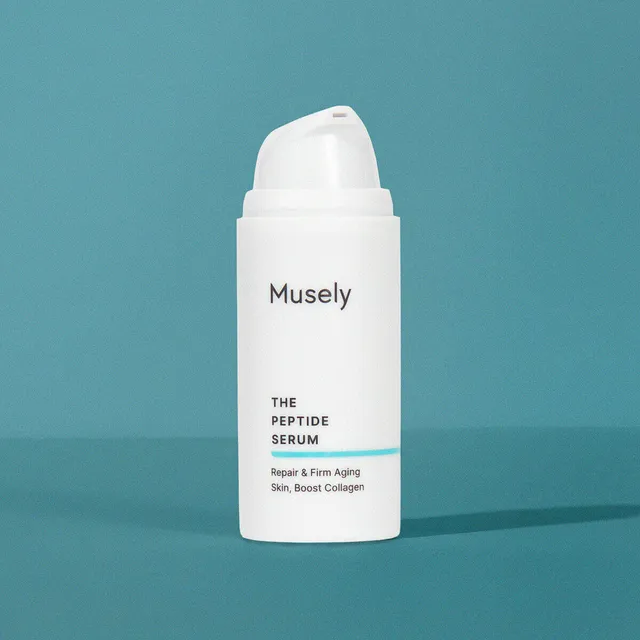
The Peptide Serum
A prescription 3% copper peptide longevity serum that rebuilds skin structure & repairs the skin barrier for firmer, smoother, stronger skin.
More tips like this

Anti-Aging
Melanie Face-Rx Testimonial

Around The Eyes
This Is The Right Time To Apply Eye Cream
Skin & Body
Methylene Blue for Skin: What It Is, How Copper Peptides Differ, and What to Know

Sun & UV Safety
Are These Chemicals Lurking In Your Sunscreen?

Body Care
How To Get Rid Of Dark Spots On Your Elbows And Knees

Other
The Top 5 Skincare Ingredients Dermatologists Use On Themselves

Other
5 Shower Mistakes That Are Ruining Your Skin
Dark Spots & Melasma