Longevity Pills: What They Are, What the Evidence Shows, and Who They're For
Longevity pills are prescription medications, compounded treatments or dietary supplements marketed to support processes associated with healthy aging. The category includes products aimed at metabolism, cellular energy, inflammation, nutrient sensing and other biological pathways that change with age. Those mechanisms are scientifically interesting, but they are not the same as a proven ability to slow aging or extend human life.
Some ingredients used in longevity products can change a laboratory value or produce a clinical benefit in a defined group of people. A medication may also have strong evidence for an approved medical use without having equivalent evidence as a longevity treatment. That distinction matters because the phrase "anti-aging pill" can make a preliminary finding sound much more conclusive than it is.
The short answer: No pill has high-quality clinical evidence showing that it extends lifespan in healthy humans. The useful question is not whether a product is a "longevity pill" in the abstract. It is which ingredients it contains, what outcomes have been studied, who was studied, what risks apply and whether medical supervision is appropriate.
This guide explains how to evaluate longevity pills without confusing biological plausibility with demonstrated results. It also shows how prescription medications, compounded formulations and over-the-counter supplements differ, and where clinician-guided options such as Musely's The Age Well Pill fit into the category.
What Are Longevity Pills?
A longevity pill is any oral product promoted around healthy aging, healthspan or biological processes associated with age-related change. It is a marketing and search category, not a single medical diagnosis or a standardized regulatory category. Two products described with the same term may differ completely in their ingredients, evidence, manufacturing oversight and risk.
Most products fall into three broad groups. The first is an FDA-approved prescription drug being discussed for a use beyond its approved indication. Metformin, for example, is an established treatment for type 2 diabetes, but its use specifically to slow aging or extend lifespan remains investigational. The second is a compounded prescription formulation prepared for an individual patient. The third is a dietary supplement sold without a prescription.
The regulatory distinction is important. The FDA explains that dietary supplements are not approved for safety and effectiveness before marketing. Compounded drugs also are not FDA-approved as finished products, which means the FDA does not review a compounded product's safety, effectiveness or quality before it is marketed. A prescription and clinician evaluation can add individualized screening and oversight, but neither automatically proves that a treatment improves longevity.
Prescription Medications vs. Dietary Supplements
An approved prescription drug has evidence supporting one or more specific indications, standardized labeling and defined manufacturing requirements. If a clinician considers that drug for another purpose, the evidence for the new purpose must be evaluated separately. FDA approval for diabetes, for example, is not FDA approval for aging.
Dietary supplements operate under a different framework. Manufacturers are responsible for product safety and labeling, while FDA generally acts after products reach the market. Supplements can also interact with prescription drugs, affect laboratory tests or be inappropriate for people with certain conditions. That is why "available without a prescription" should not be interpreted as "risk-free."
Compounded prescriptions occupy another distinct position. They may address an individual patient's needs and require a prescription, but the compounded product itself is not FDA-approved. The practical value of a clinician-guided model is therefore the evaluation process: medical history, interaction review, suitability assessment and follow-up.
Healthspan vs. Lifespan
Lifespan is the length of time a person lives. Healthspan generally refers to the portion of life spent in relatively good health and function. A study can therefore be relevant to healthy aging without showing that participants lived longer.
Researchers may measure symptoms, physical performance, sleep, metabolic markers, inflammation, cardiovascular events, disease incidence or mortality. These outcomes are not interchangeable. A change in NAD+, glucose, an inflammatory marker or an epigenetic clock may generate a useful hypothesis, but it does not by itself establish more healthy years or a longer life.
This is why reviews of biomarkers of aging emphasize validation. A credible biomarker must reliably relate to a meaningful aspect of aging, respond predictably to intervention and add information beyond ordinary clinical measures. Many popular biological-age tests have not yet cleared that full standard.
How Are Longevity Pills Intended to Work?
Aging is not controlled by one switch. It reflects interacting changes in DNA maintenance, proteins, metabolism, mitochondria, immune signaling, tissue repair and the communication between cells. Longevity products usually select one or more of these processes as a proposed target.
For example, a product may be designed around nutrient sensing, insulin sensitivity, mitochondrial energy production, oxidative stress, cellular senescence or NAD+ metabolism. Each target has a plausible role in aging biology. The critical word, however, is proposed. Affecting a pathway in a cell or animal does not guarantee a meaningful benefit in a person.
The Hallmarks of Aging Framework
A widely cited scientific framework, updated in the 2023 Hallmarks of Aging paper, organizes aging biology into 12 interconnected hallmarks. These include genomic instability, telomere attrition, epigenetic alterations, loss of proteostasis, disabled macroautophagy, deregulated nutrient sensing, mitochondrial dysfunction, cellular senescence, stem cell exhaustion, altered intercellular communication, chronic inflammation and dysbiosis.
For consumers, the framework is most useful as a map rather than a scorecard. It explains why researchers study compounds that influence metabolism, mitochondrial function or senescent cells. It does not establish that targeting one hallmark will slow whole-body aging. The hallmarks interact, and a favorable effect in one experimental system may not translate into better function, fewer age-related diseases or longer survival in people.
That gap between mechanism and outcome is where many longevity claims become overstated. A product can be grounded in real biology while still lacking clinical evidence for the result implied by its marketing.
How to Judge the Evidence Behind a Longevity Ingredient
The strength of a claim should match the strength of the evidence. Human outcomes that matter to patients sit above surrogate markers, animal models and laboratory mechanisms. This does not make early-stage evidence worthless; it tells us what conclusions the evidence can support.
When reviewing a study, ask who participated, how many people were included, how long the study lasted, what the comparison group received and whether the measured outcome was clinically meaningful. Also ask whether the result has been replicated and whether the study population resembles the person considering the product.
The wording of the conclusion should preserve those boundaries. "This ingredient changed a metabolic marker during a short trial" is materially different from "this ingredient slows aging." The first statement reports what was measured. The second assumes that the marker is a validated substitute for aging, that the change is beneficial, that the effect persists and that it improves outcomes people care about. Each additional step requires evidence. The same discipline applies when a study reports no statistically significant difference: that result may reflect a genuinely small effect, an unsuitable outcome, too few participants or a trial that was too short. It does not justify replacing uncertainty with either a sweeping benefit claim or a sweeping claim of ineffectiveness.
Evidence ladder for longevity claims
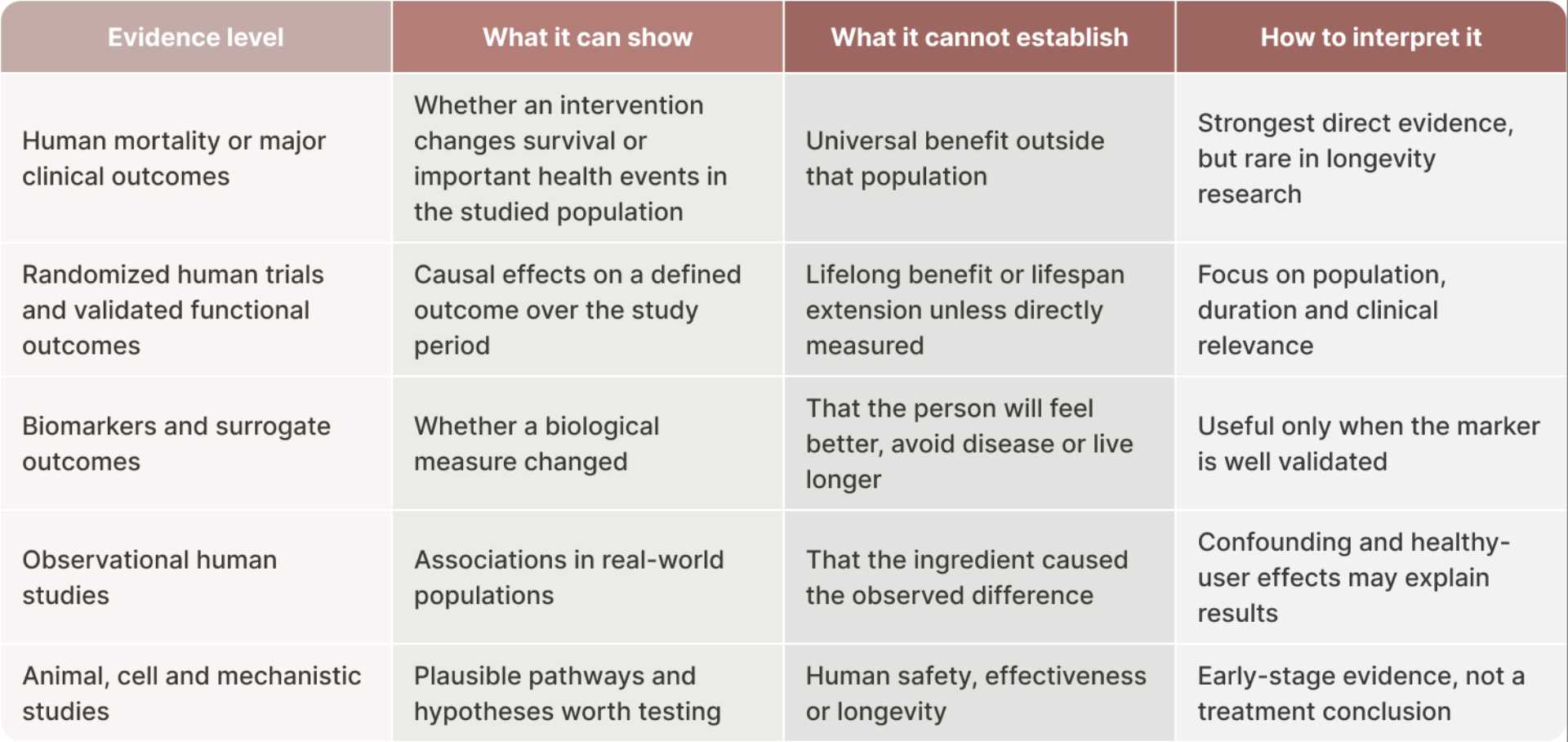
Sources: Hallmarks of Aging and biomarkers of aging review.
Common Longevity Pill Ingredients and What the Evidence Shows
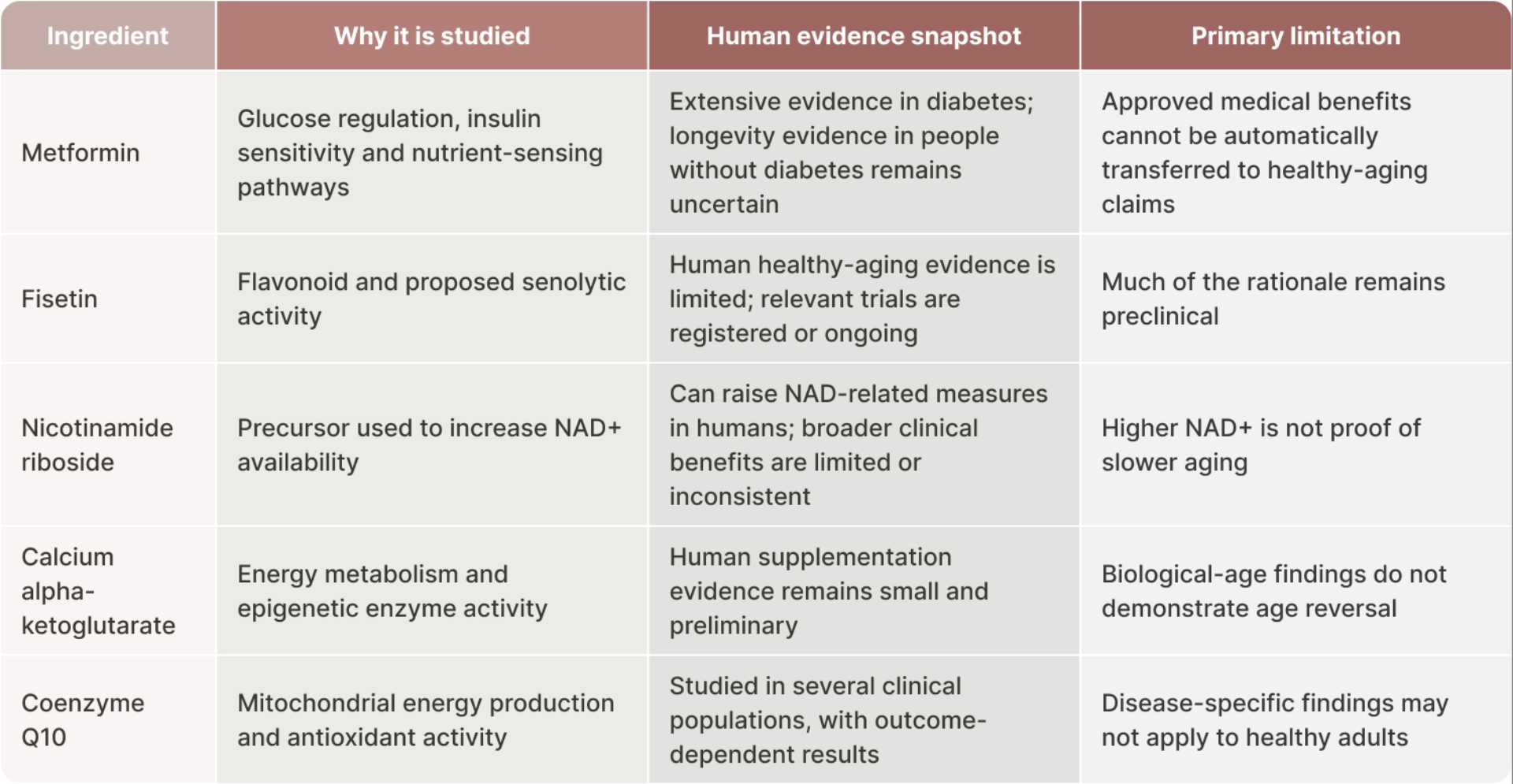
Ingredients commonly marketed for longevity do not share one evidence profile. Some are prescription drugs with decades of clinical use for a specific disease. Others are nutrients or naturally occurring compounds with strong mechanistic interest but limited human outcome data. Comparing them requires separate judgments about mechanism, human evidence, safety and regulatory status.
Metformin
Metformin is a prescription biguanide used to treat type 2 diabetes. It lowers glucose production by the liver and improves the body's response to insulin. Researchers became interested in metformin as a geroscience candidate because of its metabolic effects, its influence on pathways such as AMPK and observational findings in people with diabetes.
The evidence is less decisive than many headlines suggest. A 2025 review of metformin and aging concluded that methodological limitations, replication attempts and trials in people without type 2 diabetes create substantial uncertainty about its anti-aging potential. Metformin has not been shown to extend lifespan in healthy humans.
Metformin also requires medical context. MedlinePlus lists gastrointestinal effects such as nausea and diarrhea, possible vitamin B12 concerns, medication interactions and the need for kidney-related assessment and monitoring. A clinician should decide whether its established benefits, uncertainties and risks fit an individual patient's goals and health history.
Fisetin
Fisetin is a flavonoid found naturally in foods including strawberries, apples and onions. Interest in fisetin comes largely from laboratory and animal research suggesting senolytic activity, meaning it may affect senescent cells that have stopped dividing but remain biologically active.
That mechanism is relevant to aging research because cellular senescence is one of the recognized hallmarks of aging. But the human evidence has not caught up with the enthusiasm. Trials are being conducted in older adults and other defined populations, yet a registered or ongoing trial is not a positive result.
The appropriate conclusion is that fisetin is a promising research subject with limited human evidence for healthy-aging outcomes. See the AFFIRM-LITE fisetin study and a registered healthy-aging fisetin trial for the questions researchers are still testing.
Nicotinamide Riboside (NR)
Nicotinamide riboside is a precursor the body can use to produce NAD+, a molecule involved in energy metabolism, DNA repair and cellular signaling. NAD+ biology is important, and human trials show that NR supplementation can raise NAD-related measures.
The unanswered question is whether those biochemical changes produce consistent improvements in function, disease risk or healthy lifespan. A 2025 review found that the human evidence remains sparse and that clinical trials of NAD+ precursors have shown limited efficacy overall. Results can also vary by tissue, population and outcome.
A randomized trial in healthy middle-aged and older adults found that chronic NR supplementation was well tolerated and increased NAD+ metabolism. That supports biological activity. It does not demonstrate that NR slows aging or extends life.
Calcium Alpha-Ketoglutarate (Ca-AKG)
Alpha-ketoglutarate is an intermediate in the citric acid cycle, a central process in cellular energy metabolism. It also participates in nitrogen metabolism and serves as a cofactor for enzymes involved in gene regulation. These roles make it relevant to research on metabolism, inflammation and epigenetic change.
Animal studies and mechanistic work have generated interest in supplementation, but human evidence remains limited. Small, uncontrolled findings involving biological-age clocks are hypothesis-generating, not proof that Ca-AKG reverses aging. Without an appropriate comparison group, researchers cannot confidently separate an intervention effect from measurement variability, changes in behavior or regression to the mean.
A review of alpha-ketoglutarate supplementation in humans describes the biological rationale while emphasizing the need for more clinical research. The evidence supports continued study, not a conclusion about human lifespan.
Coenzyme Q10 (CoQ10)
CoQ10 is involved in mitochondrial electron transport, which helps cells generate energy. It also has antioxidant functions. Because mitochondrial dysfunction is associated with aging and several diseases, CoQ10 has been studied across cardiovascular, metabolic, neurological and fatigue-related contexts.
The key limitation is generalization. A benefit observed in a population with a specific disease, deficiency or medication exposure does not automatically predict a longevity benefit in a healthy adult. Studies also vary in dose, formulation, baseline status and measured outcome.
Reviews of CoQ10 supplementation in aging and disease and clinical outcomes associated with CoQ10 support its biological relevance, but they do not establish that routine supplementation extends human lifespan.
Do Longevity Pills Actually Work?
Whether a longevity pill works depends on the ingredient, the individual and the intended goal. Some ingredients have demonstrated measurable effects on biological processes related to healthy aging, while others are still being studied. The evidence is generally strongest for improving specific health conditions or biomarkers, while research into extending healthspan or lifespan in otherwise healthy adults is still developing.
It is important to evaluate each ingredient based on the available evidence. Metformin's evidence in type 2 diabetes is different from its evidence in healthy adults. NR's ability to change NAD-related measures is different from proof of better function. A fisetin result in an animal model is different from a completed human trial. The same principle applies to formulas: evidence for one ingredient cannot simply be added together and treated as proof for the finished combination.
A responsible decision starts by defining the goal and the outcome that would count as success. It then weighs the quality of evidence, likely magnitude of benefit, known risks, interaction potential, monitoring requirements and uncertainty.
Cost and complexity also belong in that analysis. A multi-ingredient regimen can make it difficult to identify which component caused a benefit or side effect. It may also duplicate ingredients already present in other supplements. A simpler plan with a clear target, transparent formulation and defined follow-up can be easier to evaluate than a large "longevity stack" assembled from overlapping claims.
Who Might Discuss a Longevity Treatment With a Clinician?
An adult may reasonably discuss a longevity-oriented treatment with a clinician when the goal is clearly defined and the conversation is grounded in medical context. That could include questions about metabolic health, persistent low energy, medication interactions, healthy-aging priorities or the difference between an over-the-counter supplement and a clinician-guided option.
The discussion is especially important when a product contains a prescription medication, when the person already takes medications or supplements, or when symptoms could reflect an untreated condition. Low energy, sleep changes or changes in metabolism are not specific to aging and may warrant ordinary medical evaluation.
A clinician's role is not to certify that a product extends life. It is to review health history, identify potential contraindications and interactions, clarify realistic goals and determine whether a prescription is appropriate.
Who Should Use Extra Caution?
No generic online list can determine individual eligibility. People who are pregnant or breastfeeding, have kidney or liver disease, take multiple medications, are preparing for surgery, are receiving cancer treatment or have unexplained symptoms should discuss any supplement or prescription longevity product with an appropriate healthcare professional.
Medication and supplement interactions matter even when each product appears familiar on its own. Metformin can require kidney assessment and may affect vitamin B12 status over time. Supplements can affect drug metabolism, bleeding risk or laboratory testing. Product quality and dose can also vary across the supplement market.
Seek urgent medical care for severe or rapidly worsening symptoms rather than using a longevity product as a substitute for diagnosis. Never start, stop or change a prescription based solely on a general article.
Questions to Ask Before Starting a Longevity Pill
A useful clinician conversation should make the uncertainty explicit. Consider asking:
What specific goal is this product intended to address?
What evidence exists in people with my characteristics and health history?
Was the measured outcome a symptom, a biomarker, a clinical event or lifespan?
Which risks or interactions apply to my medications and supplements?
What baseline information or monitoring is appropriate?
What would count as a meaningful response, and when should the plan be reassessed?
Which sleep, activity, nutrition or preventive-care foundations remain necessary?
OTC Supplements vs. Clinician-Guided Treatment
Over-the-counter access offers convenience, but it usually places more responsibility on the consumer to evaluate formulation, quality, interactions and claims. FDA does not approve dietary supplements for safety and effectiveness before they reach the market. Labels can describe structure or function, yet those statements do not establish that a product prevents disease or slows human aging.
A clinician-guided treatment can add medical intake, medication review, prescription oversight and follow-up. Those features are meaningful when the formula contains a prescription drug or when a person's health history changes the risk-benefit analysis. They do not make preliminary science conclusive, and they do not turn an off-label or compounded treatment into an FDA-approved longevity therapy.
The key advantage of a clinician-guided approach is the added medical oversight, including appropriate screening, individualized prescribing, medication review and access to ongoing support.
How Musely's Age Well Pill Fits Into This Category
Musely’s The Age Well Pill is a compounded prescription treatment formulated to support daily energy, healthy metabolism, cellular renewal and longevity. Its Foundation formula combines metformin, fisetin, CoQ10, calcium alpha-ketoglutarate and nicotinamide riboside..
Those ingredients map to several areas of longevity research: metabolic regulation, cellular senescence, mitochondrial energy production, alpha-ketoglutarate metabolism and NAD+ biology. The evidence for each ingredient is different, however, and the complete combination should not be assumed to produce every effect reported in studies of an individual ingredient.
The most important distinction between the Age Well Pill and a typical supplement stack is the clinical pathway. The treatment requires an online medical evaluation, and a Musely clinician determines whether a prescription is appropriate. That process can help identify medication conflicts, health conditions and other reasons a particular formula may not fit.
Metformin is FDA-approved for type 2 diabetes, not for longevity. The Age Well Pill's compounded formula is not FDA-approved as a treatment for aging or lifespan extension. Readers should evaluate it as a clinician-guided option built around ingredients studied in healthy-aging research, with benefits, risks and suitability determined at the individual level.
Explore Musely's longevity treatment options or learn how the Age Well Pill consultation works.
What No Longevity Pill Can Replace
A pill cannot replace the factors with the strongest established relationship to health across adulthood: regular physical activity, adequate sleep, a nutritionally adequate eating pattern, avoiding tobacco, appropriate vaccinations and screening, and effective management of conditions such as high blood pressure, diabetes and high cholesterol.
This is not an argument that lifestyle solves every problem. It is a reminder about effect size and evidence. A person who adds multiple longevity supplements while ignoring an untreated medical condition is optimizing the least certain part of the system first.
A better sequence is to establish the foundations, address diagnosed conditions and then evaluate optional treatments according to evidence, safety, cost and personal goals. Longevity products should sit inside a health plan, not replace one.
Frequently Asked Questions
Do longevity pills really work?
Certain longevity ingredients have demonstrated measurable effects on biological processes related to healthy aging, including metabolism, cellular energy and cellular renewal. Although no treatment can guarantee a longer life, a thoughtfully formulated, doctor-guided option may help support specific health and wellness goals as you age. Musely’s The Age Well Pill combines science-backed ingredients in one prescription formula, with a Musely provider determining whether treatment is appropriate for you.
Is metformin an anti-aging drug?
Metformin is an FDA-approved medication for type 2 diabetes. Researchers are studying whether its metabolic effects could be relevant to aging, but human evidence outside diabetes remains uncertain. It is not FDA-approved to slow aging or extend lifespan.
Is any supplement proven to extend human life?
No dietary supplement has been established through high-quality clinical evidence to extend lifespan in healthy humans. Animal lifespan findings, biomarker changes and observational associations can justify further research, but they do not prove longer human life.
Are longevity pills FDA-approved?
There is no FDA approval category for a general "longevity pill." An ingredient may be an FDA-approved drug for a specific condition, while its use for longevity is off-label or investigational. Dietary supplements and compounded drugs are not FDA-approved for safety and effectiveness before marketing.
What is the difference between NR and NMN?
NR and NMN are different precursors involved in NAD+ metabolism. Both can influence NAD-related pathways, but formulation, metabolism and clinical evidence differ. Neither has been shown to extend lifespan in healthy humans, and raising NAD+ does not automatically prove a functional benefit.
Are longevity pills safe with other medications?
Not always. Prescription ingredients and supplements can interact with medications, affect laboratory tests or be unsuitable with certain health conditions. Review every medication and supplement with a qualified healthcare professional before starting a new product.
How long does it take to notice a change?
There is no universal timeline because products, goals and outcomes differ. A subjective change in energy is not the same as a validated clinical result, and no early sensation demonstrates slower aging. Discuss realistic outcomes and reassessment criteria with the prescribing clinician.
Age Well Pill vs. Skin Pill: Which fits which goal?
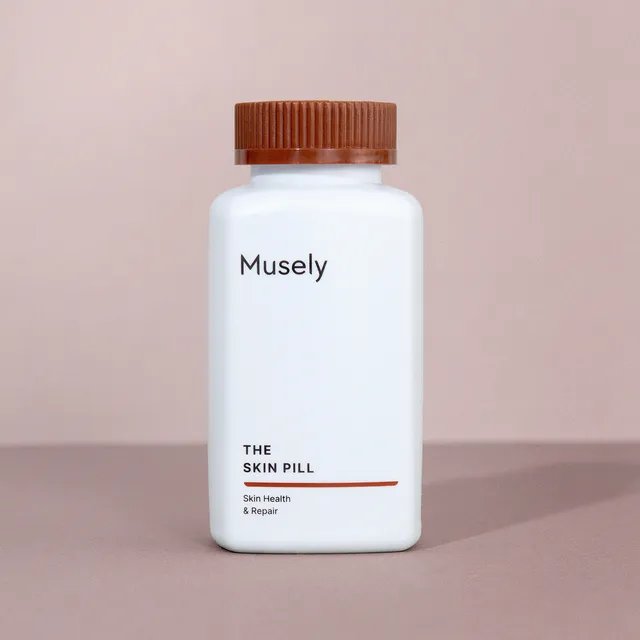
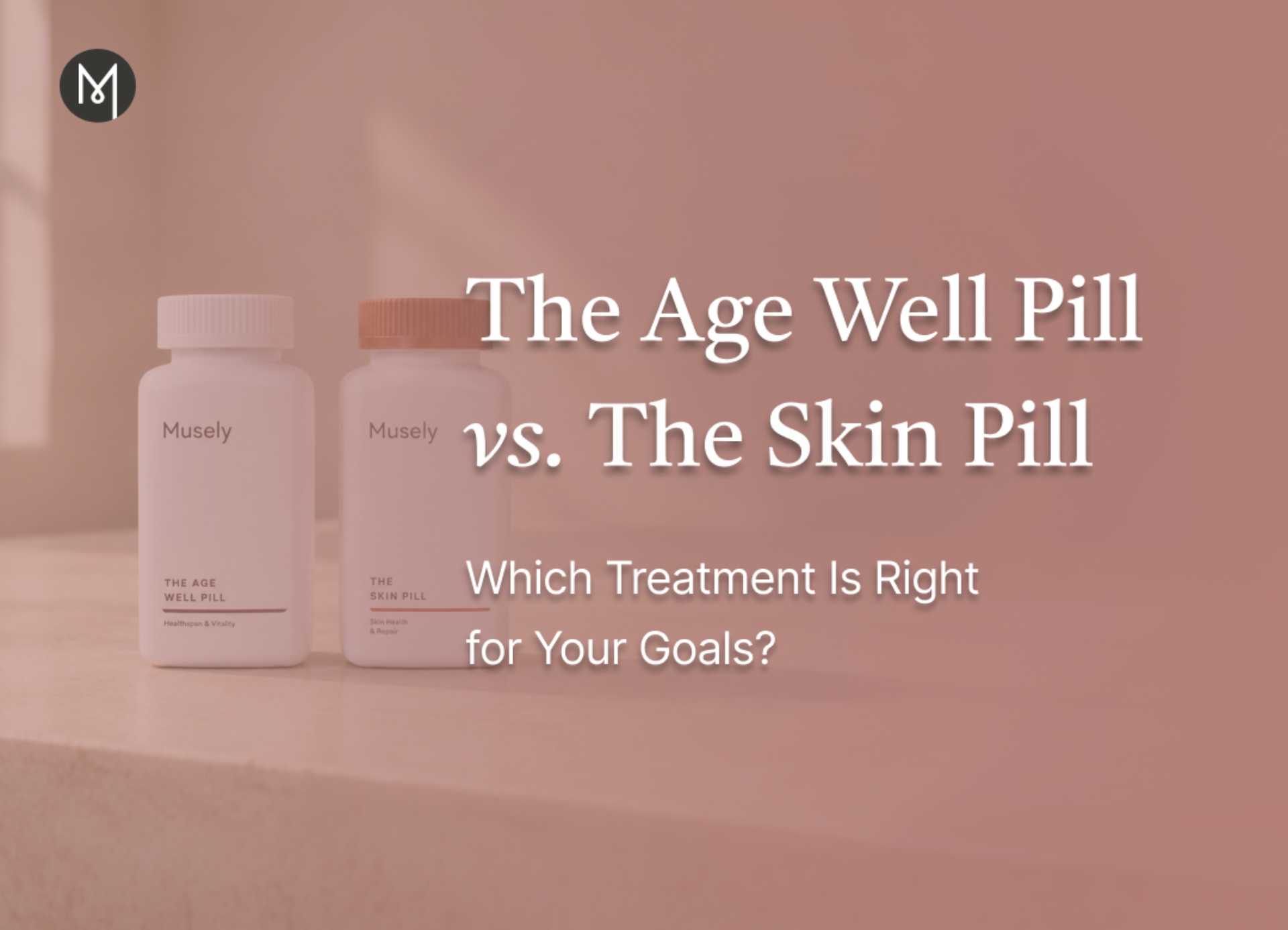
The Age Well Pill is positioned around whole-body concerns such as energy, cellular aging and metabolism. The Skin Pill is positioned around oral support for skin aging, sun damage and appearance. The correct option depends on the person's goals and medical review. See Musely's Age Well Pill and Skin Pill comparison for current product distinctions.
The Bottom Line on Longevity Pills
Longevity pills are not one treatment class and should not be judged by one promise. The category contains prescription drugs, compounded formulas and dietary supplements with different mechanisms, evidence and risks. Some ingredients have meaningful biological or clinical effects, but those effects do not establish lifespan extension.
The strongest decision framework is straightforward: define the goal, identify the exact ingredient and formulation, match the claim to the outcome actually studied, review safety and interactions, and involve a clinician when a prescription or health condition is part of the decision.
For readers interested in a clinician-guided option, Musely's The Age Well Pill provides an online medical evaluation before treatment. A Musely clinician determines whether a prescription is appropriate.
Products In This Tip
The Age Well Pill
A prescription pill with science-backed ingredients to boost energy, cell renewal, and longevity.
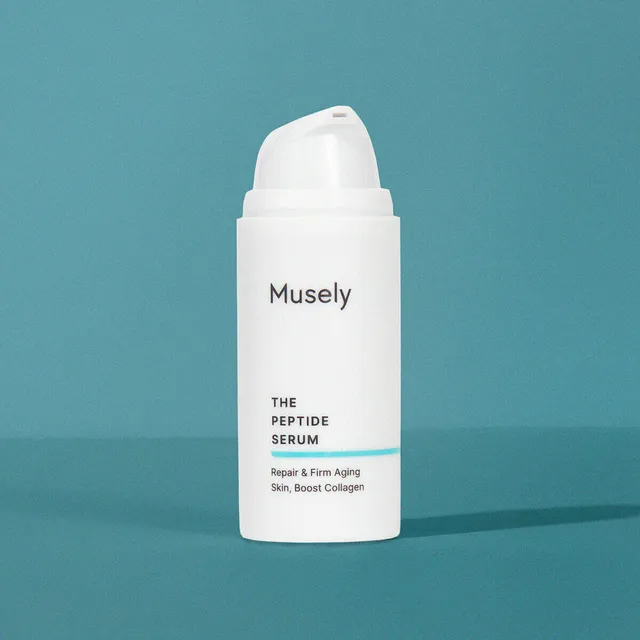
The Peptide Serum
A prescription 3% copper peptide longevity serum that rebuilds skin structure & repairs the skin barrier for firmer, smoother, stronger skin.
More tips like this
Healthy Living
Metformin as a Prescription Longevity Pill for Healthy Aging

Healthy Living
Longevity Pills: What They Are, the Evidence, and How Musely’s Age Well Pill Fits

Healthy Living
Metformin for Longevity: Benefits, Safety, and How It Works
Healthy Living
The Age Well Pill vs. The Skin Pill: Which Treatment Is Right for Your Goals?

Exosomes
Why Everyone’s Talking About Exosomes in Skincare Right Now

Healthy Living
Everything You Need to Know About The Age Well Pill

Healthy Living