Tretinoin Basics: Step‑by‑Step Guide for Clearer Skin

If you're looking for a single ingredient to address a wide range of skin concerns—from fine lines and wrinkles to acne and dullness—it’s time to learn about tretinoin. Originally approved to treat acne, this powerhouse ingredient is now celebrated as the gold standard in anti-aging skincare. It is the only FDA-approved ingredient proven to reduce the signs of aging.
Tretinoin is a prescription-strength retinoid, a derivative of vitamin A, that delivers transformative results. But this is not an overnight fix. Visible improvements build gradually over time. This guide will walk you through exactly how to use tretinoin to achieve clearer, smoother, and more youthful-looking skin.
What is Tretinoin and How Does It Work?
Tretinoin, also known as retinoic acid, works by accelerating your skin's natural cell turnover process. As we age, the rate at which our bodies produce new skin cells slows down. The standard 28-day skin cell turnover cycle can decrease by up to 50% from age 30 to age 70. This slowdown means older, more damaged cells stay on the surface longer, leading to visible signs of aging like wrinkles and uneven skin tone.
By speeding up the process of skin cell turnover, tretinoin helps new, healthy cells reach the surface faster. This process offers several key benefits:
Reduces Wrinkles: It boosts collagen production, which improves skin elasticity and firmness, softening the appearance of fine lines.
Brightens Skin: It helps shed dull, discolored cells, revealing a more radiant complexion underneath.
Fades Dark Spots: By speeding up cell turnover, it helps diminish hyperpigmentation left by sun damage or acne.
Clears Acne: It keeps pores from getting clogged, a primary cause of breakouts.
Unlike over-the-counter retinol, which your skin must first convert into retinoic acid, tretinoin is a direct-acting, potent ingredient. In fact, tretinoin is up to 20 times more potent than retinol, making it a highly effective solution for visible skin improvement.
How to Prepare Your Skin for Tretinoin
Before you begin using a tretinoin cream, it’s important to have a solid, gentle skincare routine in place. This creates a healthy skin barrier that is prepared for a powerful active ingredient. Your basic routine should include:
A mild, non-irritating facial cleanser.
A hydrating daily moisturizer.
A broad-spectrum sunscreen with at least SPF 30, used every single day.
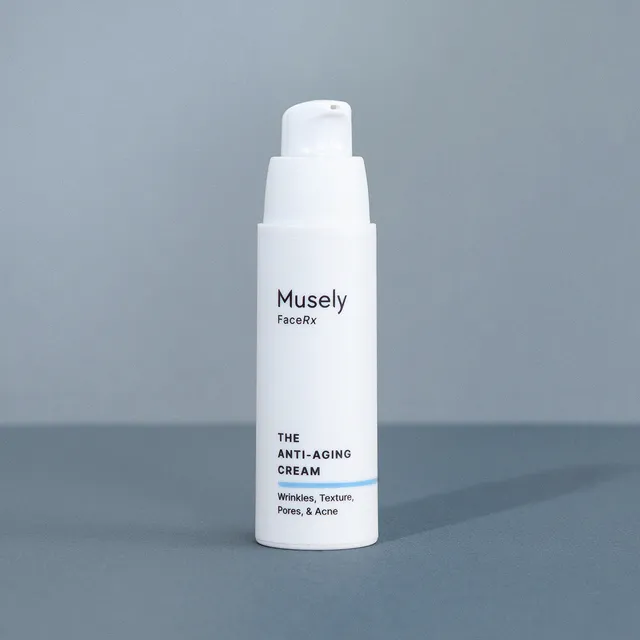
Tretinoin is available in various strengths. At Musely, your assigned board-certified dermatologist will evaluate your skin and prescribe the right strength for you. Our treatments, like The Anti-Aging Cream, are formulated by U.S. dermatologists and compounded fresh for you, ensuring maximum potency and personalization.
How to Apply Tretinoin: A Step-by-Step Guide
Following instructions carefully is key to success with a prescription-strength product like tretinoin. Here’s a simple, actionable routine to get started.
The Application Process
The goal is to start gradually and stay consistent. Tretinoin is powerful and can cause irritation if you use too much, too soon.
Start Slow: Apply your tretinoin treatment just one or two nights per week to start. As your skin adapts over several weeks, you can gradually increase the frequency to every other night, and eventually, nightly if your skin tolerates it well.
Cleanse and Dry: At night, wash your face with a gentle cleanser. Pat your skin completely dry. It's important to wait a few minutes to ensure there's no lingering dampness, as this can increase irritation.
Apply a Pea-Sized Amount: Dispense a pea-sized amount of cream for your entire face. This is all you need. Applying more won't lead to faster results but may increase side effects.
Moisturize: Follow up with a simple, hydrating moisturizer to soothe your skin and lock in moisture.
The Sandwich Method
For those with sensitive or dry skin, our dermatologists highly recommend the "sandwich method" to minimize irritation and protect the skin barrier. This technique helps buffer the tretinoin without reducing its effectiveness.
Layer 1 (Moisturizer): On clean, dry skin, apply a thin layer of a simple, hydrating moisturizer.
Layer 2 (Tretinoin): Wait a few minutes for the moisturizer to absorb, then apply your pea-sized amount of tretinoin.
Layer 3 (Moisturizer): Finish with another layer of the same moisturizer to seal everything in.
What to Expect in the First Few Weeks
When you first start using tretinoin, your skin goes through an adjustment period often called "retinization." During this phase, it's normal to experience some side effects as your skin adapts.
Dryness and Peeling: Tretinoin accelerates the shedding of dead skin cells, which can cause flaking or peeling. This is a sign the treatment is working.
Redness and Irritation: Some initial redness or a warm sensation is common. This typically subsides as your skin builds tolerance.
Increased Photosensitivity: Your skin will be more sensitive to the sun. Daily use of a broad-spectrum sunscreen is non-negotiable to protect your skin from damage.
These effects are temporary and usually lessen with continued, consistent use. Just listen to your skin—if irritation feels excessive, take a break for a night or two.
What to Avoid While Using Tretinoin
To get the best results and avoid irritation, it’s important to know what not to do.
Don't combine with other harsh ingredients. On the nights you use tretinoin, avoid other potentially irritating actives like glycolic acid (AHA), salicylic acid (BHA), benzoyl peroxide, and vitamin C serums. Stick to one powerful active at a time.
Be careful with other skin treatments. Stop using tretinoin for 3-5 days before and after professional treatments like facials, waxing, or laser procedures.
Never skip sunscreen. Tretinoin and sun exposure are a bad combination. Protect your skin every day with a broad-spectrum SPF 30 or higher, even on cloudy days.
When to Talk to a Clinician
Since tretinoin is a prescription medication, you'll start your journey with a consultation. With Musely, you can get prescription skincare without the waiting room. Simply complete a 3-minute online consultation form, and a board-certified dermatologist will create your personalized treatment plan.
Throughout your treatment, you have access to your prescribing dermatologist for questions and adjustments. If you experience severe or prolonged side effects, don't hesitate to reach out. Your clinician can provide guidance, which may include taking a short break or adjusting your formula.
With consistent use, you can expect to see initial improvements in skin texture within a few weeks. The long-term, collagen-building benefits that lead to firmer skin and smoother wrinkles typically become noticeable after three to six months.
Ready to start your journey to clearer, more youthful skin? Learn more about the power of tretinoin and begin your online consultation with a Musely dermatologist today. We've treated over 1 million patients and counting, and we're here to help you achieve real, lasting results.
Products In This Tip
More tips like this

Anti-Aging
Melanie Face-Rx Testimonial

Anti-Aging
Stop The Clock On Your Skin Before It's Too Late

Anti-Aging
Eradicate Years Of Wrinkles In 60 Days, Guaranteed!

Anti-Aging
5 Signs Your Skin Is Aging Faster Than You Are (And What You Can Do About It)

Anti-Aging
An Anti-Aging Skincare Guide For Women After 30

Anti-Aging
Exosome 101

Anti-Aging
The Road To Veteran: How To Use Tretinoin 0.1% Cream

Anti-Aging