Are Sunspots Permanent?

What are Sunspots?
Sunspots are flat areas of skin discoloration that vary from tan, to different shades of brown. Sunspots are also commonly known as liver spots, but actually have nothing to do with your liver! The name came about because they were once thought to be a sign of a malfunctioning liver and the spots are often the color of the liver. Sunspots generally develop on areas of your skin that are regularly exposed to the sun, such as your face, shoulders, back, back of your hands or forearms, and feet. Typically, sunspots start to appear around the age of 40, but some people may develop them earlier or later in their lives, depending on the amount of sun exposure they’ve had (Santos-Longhurst).
Tanning occurs when the sun emits ultraviolet (UV) radiation that increases the production of skin cells, known as melanocytes. Melanocytes produce melanin, a type of pigment that gives the skin its color. When there is a boost or reduction in melanin production in particular areas, overpigmentated (hyperpigmented) or underpigmented (hypopigmented) skin occurs. Sunspots are the result of hyperpigmented skin blemishes caused by long term sun exposure (Caporuscio).
Are Sunspots Bad?
Sunspots can be a nuisance and you may have a lot of questions about the impact of these little discolored spots. Are sunspots permanent? Do sunspots grow? Do sunspots go away? Can sunspots be removed? We have all the answers! First, let’s answer the biggest question: are sunspots bad? Despite their appearance, sunspots are generally harmless! They are not a sign of cancer and do not put your health at serious risk. These benign areas of pigmented skin are, however, easily confused with other types of similar looking sun-related spots on the skin.
Sunspots, or Something Else?
Sunspots are often mistaken for other skin conditions that mimic its appearance (Santos-Longhurst). This is why it is extremely important to always get checked out by a medical professional if you are unsure of your skin condition. Identifying correctly between sunspots, freckles, birthmarks, melasma, and skin cancer requires an understanding of each.
Similar to sunspots, melasma is also a common skin issue that affects areas with long term sun exposure, which mainly includes the forehead, cheeks, nose, and upper lip. Melasma presents itself on the skin as brown or gray-brown patches and is normally concentrated on the face, but can also appear on the arms, neck, and back. There are unique situations where melasma can typically fade on its own, and that is when it is triggered by a specific change, such as pregnancy or birth control pills. Once the baby is delivered or the birth control pills are stopped, then melasma can fade (American Academy of Dermatology Association). Additionally, melasma is also more common in women as it can be triggered by hormones and is very common during pregnancy, thereby is often referred to as a “pregnancy mask”. Melasma is also harmless and more of a beauty concern than a medical one.
Freckles, like sunspots, are flat brown spots that are more noticeable in the summer when exposed to more sunlight and can fade or disappear in the wintertime. These spots are genetically passed down and most often seen in fair-skinned individuals. What differentiates freckles from sunspots is that unlike sunspots, freckles become less apparent with age.
Birthmarks come in all shapes, sizes, and colors and appear at birth or shortly afterwards. There are two main types of birthmarks: pigmented and vascular. A pigmented birthmark is made of a cluster of abnormal pigment cells in the skin. They can range from many different colors, such as tan, brown, gray to black, or even blue. Vascular birthmarks are a result of blood vessels that haven’t formed correctly, which forms clumps under the skin. They are usually assorted shades of red or pink. Like sunspots, a majority of birthmarks are harmless, but some can be associated with health problems and require further professional medical consultations.
According to the Skin Cancer Foundation, skin cancer is the most common cancer in the US and worldwide and 1 in 5 Americans will develop it by the age of 70. The two main causes of skin cancer are the sun’s harmful ultraviolet (UV rays) and the use of UV tanning beds (Dr. Sarnoff, M.D.). Sunspots are typically harmless, but can also be cancerous. While sunspots can change in shape and size, any spots that grow rapidly, changes in appearance, or seem questionable should be evaluated by a medical professional.
Do Sunspots Go Away?
Are you wondering… will sunspots go away completely or do sunspots fade eventually? With time, some sunspots can fade on their own, but they usually will not naturally disappear completely. A spot that is a few shades darker than your natural skin color will usually fade within the year, but if the color lies deep in your skin, fading can take many years. Prevention is always easier and better than trying to cure sunspots later on. It is important to use a mineral sunscreen, such as The Day Cream from Musely, daily to protect your skin. Other options include wearing long sleeved clothing to cover up your skin outdoors or avoiding the sun during its peak hours from 10 a.m. to 3 p.m. Sunspots slowly darken over time with continued sun exposure. It is possible for sunspots to fade naturally if the sun is avoided for a long period of time!
Can Sunspots Be Removed?
Not satisfied with the answer to the questions of do sunspots go away on their own or when do sunspots disappear because you’re hoping for a faster solution? Are you also wondering if they require treatment for removal? As stated before, sunspots aren’t harmful and they don’t need to be treated. However, for people who want to treat it for cosmetic reasons, there are several options for treatments for cosmetic reasons!
How To Cure Sunspots With The Spot Cream
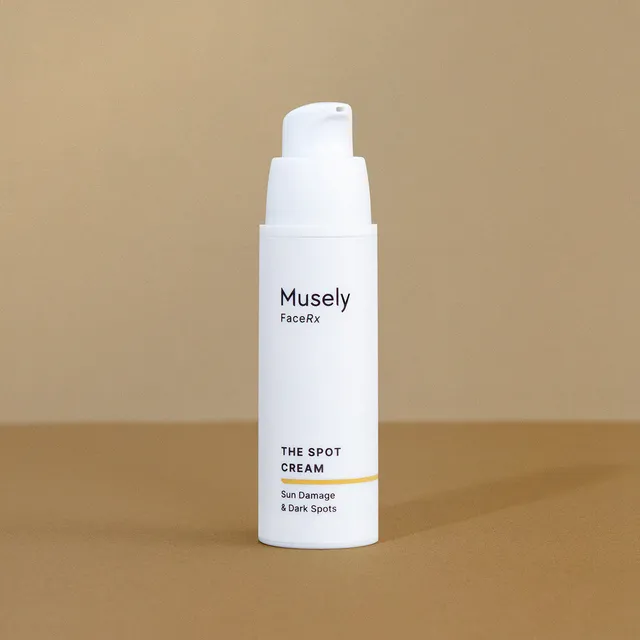
Treatments that diminish the appearance of sunspots may include bleaching creams, acid peels, laser resurfacing, and many at-home DIYs. However, trying these treatments can be ineffective, irritate your skin, and sometimes dangerous without the guidance and approval of a dermatologist. A safer and long-term treatment to erase sunspots and prevent them from returning is with Musely’s The Spot Cream. It is typically recommended to visit a dermatologist to get rid of stubborn sunspots, and with Musely, you can do it in the comfort of your own home and on your own time. Your assigned board certified dermatologist is easily accessible through telehealth so that you can address any immediate questions or concerns you may have.
The pigment of sunspots are located at the base of the most superficial layer of the skin called the epidermis. Treatments that are meant to lighten these brown spots are only effective if they penetrate through this layer of skin. Therefore, medications prescribed with hydroquinone, such as The Spot Cream, are the best options to gradually fade the sunspots over time (Dr. Green, M.D.).
Now that you’ve gained a deeper understanding of sunspots, you no longer have to wonder: are sunspots permanent? Sunspots are not a concern once they are confirmed as definite sunspots, and can be treated if you would like! Musely offers an effective and affordable sunspot treatment to get rid of your spots permanently.
Why choose FaceRx for your prescription skin care needs
While you can get prescription hydroquinone skin care products at your local pharmacy, these prescription dermatology products often lose their potency and effectiveness since they are mass-manufactured before reaching shelves. On the other hand, Musely’s FaceRx prescription skin care products are freshly compounded and are 10x more potent than over-the-counter (OTC) products or prescription alternatives. Formulated by top Board-Certified Dermatologists, Musely also offers a variety of formulas based on each individual’s skin concerns. In addition, FaceRx treatments work for all skin types and tones. With over 40 customized formulas, Musely has a treatment suitable for everyone.
Another benefit of using FaceRx treatments is convenience. Scheduling an in-person dermatologist visit can be extremely difficult since it typically takes around 4-8 weeks to get an appointment. With FaceRx, the dermatologist visit is entirely online and takes only 3 minutes. Complete the online questionnaire about your skin and medical history, upload three photos of your skin, and your assigned dermatologist will prescribe you the best formula for your skin concerns based on your online visit. There is no need to wait in long lines at the doctor’s office or pharmacies; medication is delivered straight to your door — no shipping fees and tax-free. Furthermore, FaceRx treatments are less costly compared to other procedures such as lasers and microneedling. The Spot Cream costs less than a dollar a day. Effective and affordable, the best prescription skin care products are found at Musely!
Behind The Scenes: The FaceRx Story
Musely CEO’s wife Cherry, struggled with melasma for years with no solution. She spent thousands of dollars on lasers and OTC treatments, all to no avail. One day, Musely got a tip from dermatologist Dr. Marie Jhin, who shared her secret of prescription skin care. After seeing Dr. Jhin, Cherry’s dark spots were gone and her wrinkles were significantly reduced. Her skin was completely transformed in just a matter of two months! The treatment? It included a prescription for tretinoin, hydroquinone, among others that can only be obtained through doctor visits or pharmacies. Musely CEO Jack Jia was so blown away by Cherry’s results that he wanted to share her amazing transformation with the entire Musely community and make prescription skin care treatments accessible to everyone.
9 months later, FaceRx was born! Musely engineers built an online telemedicine platform. A dozen of the country’s top board-certified dermatologists joined Dr. Jhin to form what is now known as The Musely Medical Board. They developed special formulas that can be customized for each individual. A patient would receive a treatment prescribed and dispensed by their dermatologist and pharmacist just for them! Musely also developed eNurse, an extension to the existing Musely tips app, to allow the same doctor and pharmacist to support the patient during the 60-day treatment period.
Thanks to FaceRx, dermatologists can now oversee treatment for multiple patients at the same time from anywhere. Users can finish their doctor visit within minutes from the comfort of their home and receive their treatments at their doorstep within days.
With prescription skin care treatments that are affordable and accessible to everyone, FaceRx is the number one choice for treating dark spots, aging, and more—with results that actually last!
About Musely
Musely provides prescription skin care treatments through technology. Musely enables talented dermatologists and pharmacists to deliver and administer medical treatments for skin conditions and skincare, online. With its revolutionary approach, Musely enables the science of youth quickly and inexpensively from the convenience of your home. Founded by successful Silicon Valley serial entrepreneurs, Musely is on a mission to deliver health and healthy living to every person in the world.
Sources
1) Santos-Longhurst, Adrienne. “Are Sunspots on the Skin Cancerous? Comparing Different Types of Skin Lesions.” Healthline, Healthline Media, 26 July 2018.
2) “Melasma: Diagnosis and Treatment.” American Academy of Dermatology, American Academy of Dermatology Association.
3) “Skin Cancer 101.” Edited by Deborah S. Sarnoff, M.D., The Skin Cancer Foundation, The Skin Cancer Foundation, 10 Jan. 2021.
4) Green, Dr. Michele. “Are Sunspots Permanent?” Dr. Michele Green M.D., 13 Aug. 2020.
5) Caporuscio, Jessica. “What to Know about Sunspots on the Face.” Medical News Today, MediLexicon International, 30 Jan. 2020.
Products In This Tip
More tips like this

Dark Spots & Melasma
Tranexamic Acid for Hyperpigmentation: Topical vs. Oral, Explained by Dermatologists
Dark Spots & Melasma
Hydroquinone 12% vs 2%: What Concentration Does the Science Support?

Dark Spots & Melasma
Clearer Skin: Getting Rid of Dark Spots

Dark Spots & Melasma
60 Days Later ..
Dark Spots & Melasma
Fast Hydroquinone Rx Online: Clear Dark Spots in Weeks

Dark Spots & Melasma
My Fight With Hyperpigmentation Is Over!

Dark Spots & Melasma
Hydroquinone 101: Your Secret Weapon Against Summer Hyperpigmentation

Dark Spots & Melasma